DIY Power Backup: Generators, Solar & Battery Solutions
停電対策・自家発電 DIY
Power outages following major earthquakes and typhoons in Japan can last from a few hours to several days. In 2018, Typhoon Jebi left more than 1.6 million households in the Kansai region without power for up to a week. In the same year, the Hokkaido Iburi earthquake caused a complete blackout across the entire prefecture — affecting 2.95 million households simultaneously.
A reliable backup power strategy can keep your refrigerator running, charge your smartphone for emergency communications, power medical equipment, and keep lights on after dark. This guide covers three approaches: portable generators, solar panel chargers, and portable power stations.
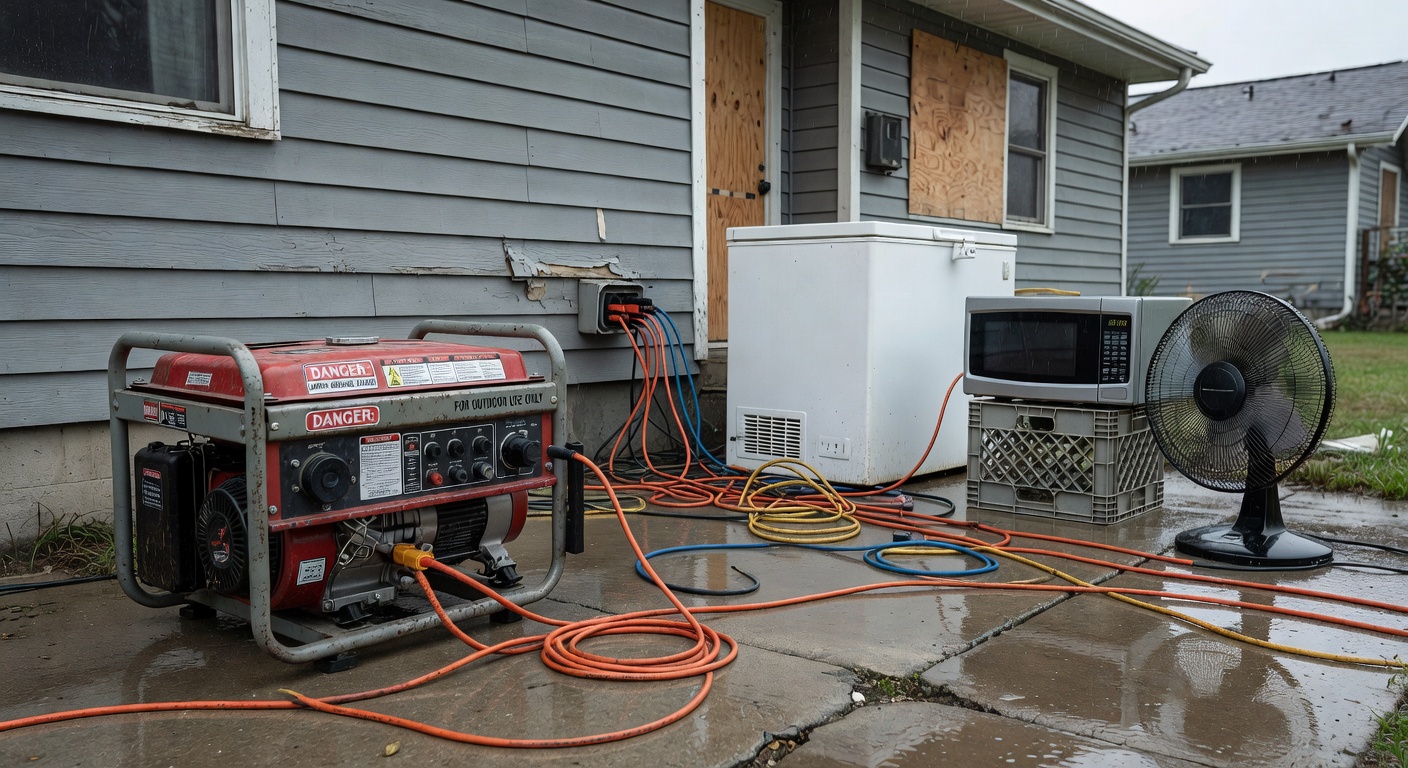
Option 1: Portable Generator — Setup Guide
A petrol-powered portable generator offers the highest output (typically 1,000–3,000W) and is suitable for powering multiple appliances simultaneously. However, it requires fuel storage and must always be operated outdoors due to carbon monoxide risk.
Critical Safety Warning — Carbon Monoxide
NEVER operate a petrol generator indoors, in a garage, on a balcony, or near any window or air intake. Carbon monoxide is odorless, colorless, and fatal within minutes in an enclosed space. Keep the generator at least 6 meters from any door or window, with the exhaust facing away from the building.
- Choose a location. Select a flat, dry outdoor surface at least 6 meters (20 ft) from your building. Ensure exhaust fumes cannot re-enter through windows, vents, or doors. Never place it under an overhang or tarp that traps fumes.
- Check oil and fuel before use. Verify the engine oil level with the dipstick before each use. Use fresh, properly-stored petrol (ideally under 30 days old with a fuel stabilizer added). Old or phase-separated fuel is a leading cause of starting failures.
- Ground the generator. Connect a grounding wire from the generator's grounding terminal to a metal stake driven into the earth to reduce the risk of electric shock.
- Connect appliances before starting. Plug appliances into the generator's built-in outlets using heavy-duty outdoor-rated extension cords. Do not exceed the rated wattage — add up the wattage labels on each device you plan to power.
- Start the generator and allow warm-up. Follow the manufacturer's starting sequence (usually choke, prime, pull-start). Allow 2–3 minutes to warm up before applying heavy loads like a refrigerator.
- Monitor and refuel safely. Turn off and allow the generator to cool for at least 2 minutes before refuelling. Never refuel while running. Keep a fire extinguisher within reach.
Option 2: Solar Panel Charger — Step-by-Step
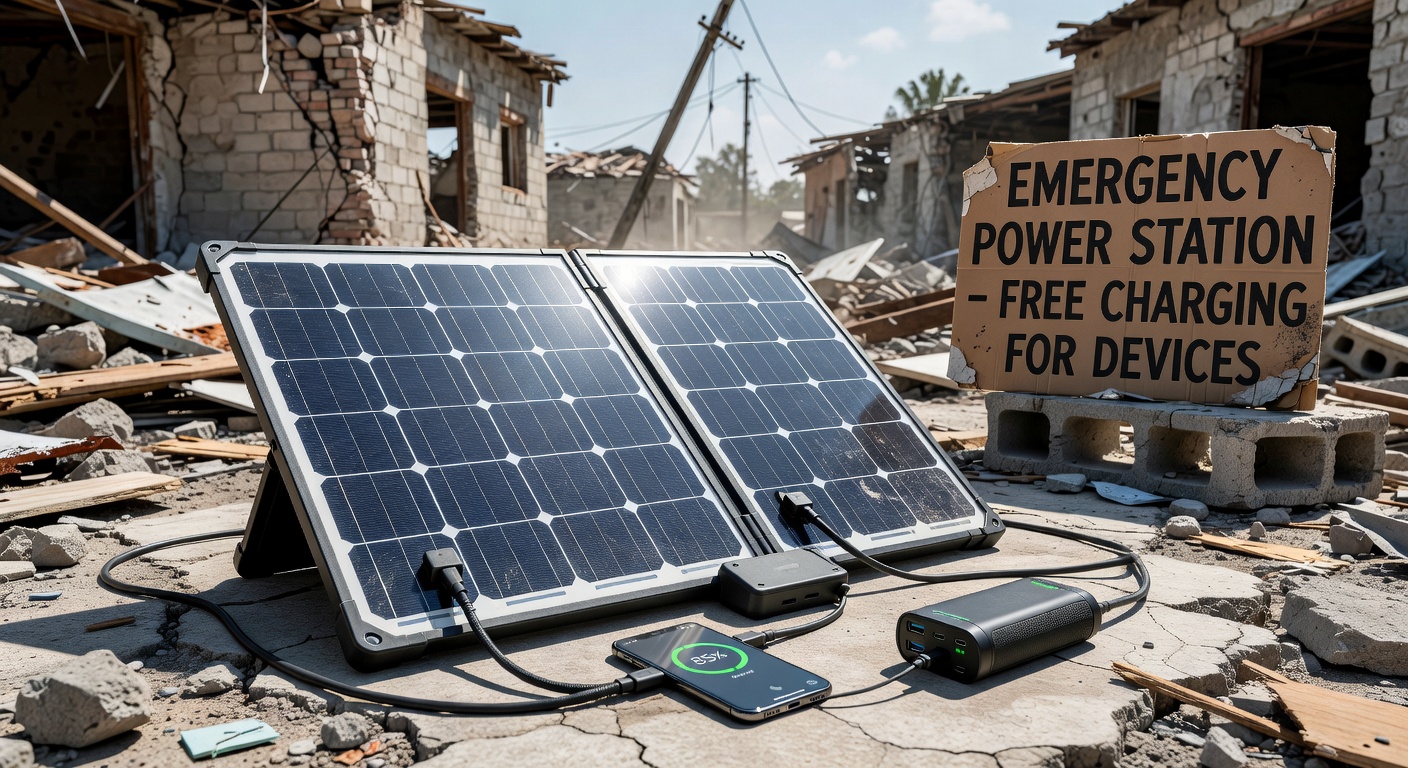
Portable solar panels — typically foldable panels rated 60–200W — paired with a portable power station offer a silent, fuel-free backup. Output is weather-dependent, but in Japan's sunny climate, a 100W panel can generate 300–500Wh on a typical clear day.
- Select your panel and power station combination. For charging smartphones, a radio, and LED lighting, a 60–100W panel paired with a 300–500Wh portable power station (ポータブル電源) is sufficient. For a small refrigerator, aim for 200W of panels and a 1,000Wh station.
- Position the panel for maximum sunlight. Angle the panel toward the south at approximately 30–45 degrees from horizontal. On a balcony, secure the panel to the railing using zip ties or a dedicated mounting bracket rated for wind.
- Connect to the portable power station. Use the MC4 or Anderson connector cable supplied with your panel. Check polarity markings. Connect to the power station's solar input port — the station's charge controller handles voltage regulation automatically.
- Monitor charging status. Most portable power stations have an LED or LCD display showing input watts and remaining capacity. On a clear day, a 100W panel typically delivers 60–80W of actual charging power in optimal conditions.
- Store the power station indoors. Lithium-ion batteries degrade faster in extreme heat or cold. When not in active use, store the power station indoors at room temperature and maintain 40–80% charge for long-term battery health.
Advertisement space — 728 × 90
Comparing Your Options
| Feature | Petrol Generator | Solar + Power Station | Power Station Only |
|---|---|---|---|
| Power output | 1,000–3,000W | 300–1,000Wh (daily) | 300–2,000Wh (one charge) |
| Run time | Unlimited (with fuel) | Unlimited (sunlight) | Limited to capacity |
| Noise level | High (65–75 dB) | Silent | Silent |
| Indoor use | Never (CO risk) | Panel outdoors only | Yes, fully safe indoors |
| Maintenance | Regular (oil, spark plug) | Low (clean panel surface) | Very low |
| Cost (approx.) | ¥30,000–¥80,000 | ¥60,000–¥150,000 | ¥30,000–¥100,000 |
| Fuel/storage | Petrol (fire risk) | Sunlight (free) | Pre-charged (grid) |
Essential Power Priorities During an Outage
Not all appliances are equally important. During an extended outage, prioritize power use in this order:
High Priority
- Medical equipment (CPAP, nebulizer, oxygen concentrator)
- Smartphone charging for emergency information
- AM/FM emergency radio
- LED lighting for safety and mobility
- Refrigerator for medications (insulin, etc.)
Secondary Priority
- Refrigerator for food preservation
- Portable electric kettle or induction cooktop
- Laptop computer for communication
- CPAP or other nightly medical devices
- Small fan or electric blanket for temperature regulation
Store Fuel Safely
If you maintain a petrol generator, store fuel in approved metal or HDPE plastic canisters designed for petrol storage. Keep no more than 10–20 litres at home due to fire regulations. Add a fuel stabilizer (like STA-BIL) to prevent degradation if storing more than 30 days. Store canisters in a cool, well-ventilated area away from any ignition source.